


When people talk about luxury in homes, they usually imagine large rooms, tall ceilings, and expensive furniture. But anyone who has actually lived in a small space knows that luxury is not really about size. It’s about how a place feels when you walk into it at the end of the day.
Some small homes feel tight and cluttered, while others feel calm, comfortable, and surprisingly elegant. The difference is rarely money. It’s mostly about choices — what you keep, what you skip, and how much you let the space breathe.
Luxury in a small home is quiet. It doesn’t shout for attention. And the good part is, it’s very achievable without spending much.
Keeping Colours Light Without Making the Space Feel Flat
One of the simplest ways to make a small space feel better is through colour. Dark colours can look beautiful, but in small rooms they often make the walls feel closer than they really are. The space starts to feel heavy, especially when there isn’t a lot of natural light.
Light colours give a room some air. Soft whites, warm creams, pale greys, and gentle beige tones help reflect light instead of swallowing it. The room feels calmer almost immediately.
That doesn’t mean everything has to be plain or boring. What matters is where the colour goes. When walls, ceilings, and large furniture stay neutral, the space feels more open. Colour can then come in through smaller things – cushions, throws, art, or even books.
Consistency helps more than people realise. When every room flows into the next without sudden colour changes, the home feels larger and more put together. Sharp contrasts between rooms can make a small home feel chopped up.
Luxury often comes from visual calm. When the eyes don’t have to constantly adjust, the space feels easier to live in.
Choosing One Good Piece Instead of Many Small Ones
In small spaces, it’s very tempting to decorate every corner. Empty areas can feel unfinished at first. But over time, too many decorative items start to make the space feel crowded and restless.
Homes that feel luxurious usually have fewer things, not more. Each item feels like it belongs there.
Instead of several small accessories, one strong piece often works better. A large mirror, a statement lamp, or a well-sized artwork can anchor the room without cluttering it. These pieces give the eye a place to land.
When there is too much decor, nothing really stands out. Everything blends into visual noise. Removing even a few items can instantly make the space feel more intentional.
Quality also matters here. One solid, well-made piece usually looks better than multiple cheaper ones. In a small space, people notice details more closely. Simple, sturdy items tend to age better and feel more grounded.
Luxury is not about filling space. It’s about knowing when to stop.
Lighting That Makes the Space Feel Lived In
Lighting changes everything, especially in small homes. Relying only on a ceiling light is one of the fastest ways to make a room feel flat and uncomfortable.
Layered lighting makes a huge difference. It gives depth and warmth to a space. When there are lights at different heights, the room feels softer and more welcoming.
This doesn’t require expensive fittings. A floor lamp beside a sofa come bed, a table lamp near the bed, or a small light in a dark corner can completely change how a room feels at night
Warm light is especially important. Harsh white lighting can make even well-decorated rooms feel cold. Softer tones make the space feel relaxed and personal.
Overhead lighting works best as support, not as the main focus. When it’s combined with smaller light sources, shadows soften and the room feels fuller.
A well-lit room often feels more luxurious than a beautifully furnished one that feels dark and uneven.
Using Fabric and Texture to Add Comfort
Texture is what turns a space from looking nice into feeling good. Hard surfaces alone can make a room feel stiff, especially when space is limited.
Soft furnishings bring warmth without taking up much room. Curtains, cushions, and throws add comfort and make the space feel lived in rather than staged.
You don’t need expensive fabrics for this. Linen-look curtains feel relaxed and airy. Velvet accents add depth. Knitted or woven throws bring a sense of softness and ease.
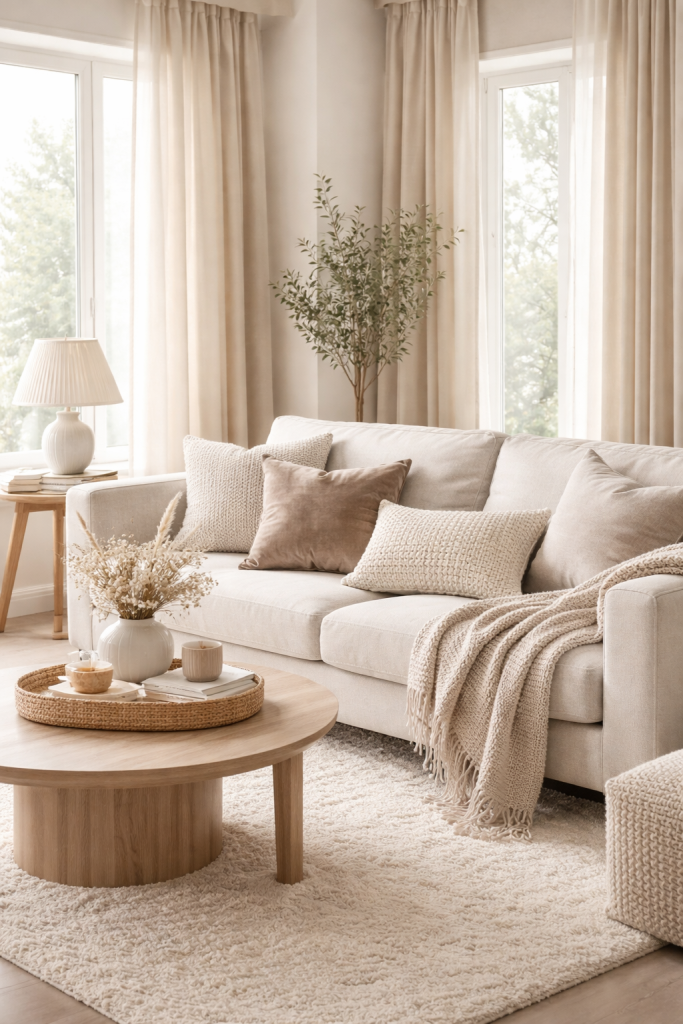
Mixing textures works better than mixing patterns. A smooth surface next to something soft creates contrast without chaos. This adds interest without overwhelming the space.
Keeping textures within the same colour family helps maintain balance. When colours stay consistent, different materials stand out naturally.
Luxury often comes from how a space feels when you sit down, not just how it looks from a distance.
Making Mirrors Work Without Overdoing Them
Mirrors are one of the most practical tools in small homes. They reflect light, make rooms feel deeper, and open up tight spaces when placed well.
A mirror opposite a window can double the amount of light in a room. Even in low-light homes, this simple trick makes a noticeable difference.
Mirrors can also replace decor. A large mirror with a clean frame can do the work of several accessories while also serving a purpose.
Reflective surfaces don’t stop with mirrors. Glass tables, a sleek coffee table, metallic accents, and subtle glossy finishes bounce light around the room and reduce visual heaviness
That said, restraint matters. Too many reflective surfaces can feel cold or distracting. One or two well-placed elements usually work best.
Luxury is about balance, not shine everywhere.
Clean Finishes and Small Details That Matter
What often separates a space that feels ordinary from one that feels refined is attention to small details.
Clean lines help a room feel organised. When furniture and decor aren’t fighting for attention, the space feels calmer.
Symmetry plays a quiet role here. Matching lamps, balanced arrangements, or evenly spaced items create order without effort. Even when the style is relaxed, symmetry brings a sense of calm.
Organisation also affects how luxurious a space feels. Trays, baskets, and simple storage solutions keep everyday items from spreading visually.
Hardware is another small thing that adds up. When handles, knobs, and finishes match, the room feels cohesive. Mixed styles can make a space feel unfinished.
Luxury often hides in these details. People may not notice them individually, but they feel the difference.
Letting the Space Breathe
One of the hardest things to accept in a small home is that empty space is not wasted space. It’s necessary.
Rooms that feel luxurious usually have areas that are intentionally left simple. This gives the eye a place to rest and allows key pieces to stand out.
Clear walkways and open sightlines also matter. When furniture placement allows easy movement, the room feels larger and more comfortable.
Not every wall needs art. Not every table needs decor. Sometimes leaving space alone is the best design decision.
Final Thoughts
Making a small space feel luxurious is not about copying magazine homes. It’s about creating a place that feels calm, comfortable, and easy to live in.
Light colours, thoughtful lighting, soft textures, and fewer, better choices go a long way. These changes don’t demand a big budget, just a bit of patience and intention.
When a home feels luxurious, it’s usually because nothing feels forced. Everything has room to exist, and the space feels settled.
That sense of ease is what people notice first — and what they remember most.