

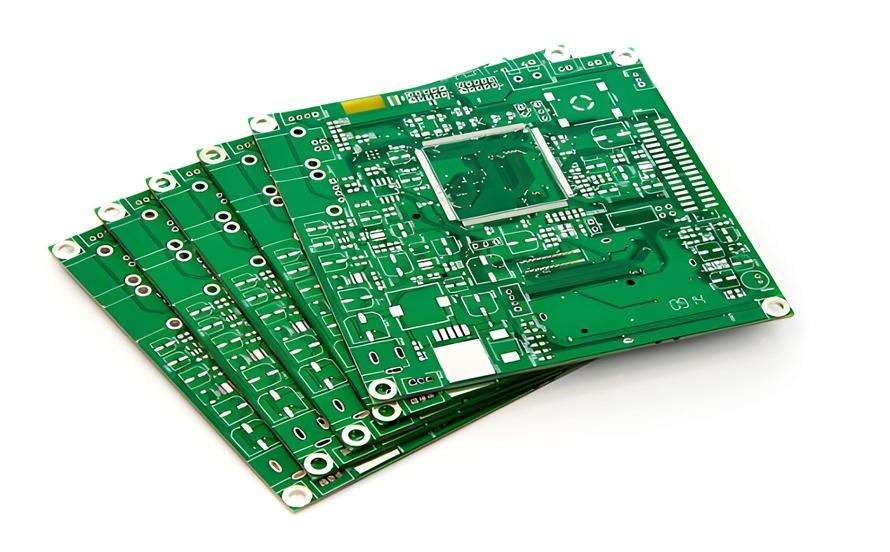
The rapid advancement of modern electronics has created a growing demand for printed circuit boards that can withstand extreme operating environments while maintaining excellent electrical and mechanical performance. Applications such as aerospace systems, automotive electronics, medical devices, military equipment, and industrial automation often expose circuit boards to high temperatures, continuous vibration, harsh chemicals, and repeated mechanical stress. Under these demanding conditions, conventional PCB materials may not provide the reliability required for long-term operation. This is where the Polyimide PCB has become an essential solution.
Polyimide is a high-performance polymer known for its exceptional thermal stability, flexibility, chemical resistance, and mechanical strength. Compared to standard FR-4 materials, polyimide offers significantly better performance in environments involving elevated temperatures and continuous thermal cycling. As a result, Polyimide PCBs are widely used in applications where reliability is critical and product failure is not an option.
Because processing polyimide materials requires specialized manufacturing techniques and precise process control, selecting an experienced Polyimide PCB manufacturer is vital for ensuring product quality and long-term performance.
This article explores what a Polyimide PCB is, how it is manufactured, its advantages, common applications, and why choosing the right manufacturing partner is important.
What Is a Polyimide PCB?
A Polyimide PCB is a printed circuit board manufactured using polyimide-based substrate materials instead of conventional epoxy fiberglass laminates. Polyimide possesses outstanding thermal, mechanical, and chemical properties that make it suitable for high-performance electronic applications operating under extreme conditions.
Unlike traditional PCB materials, polyimide maintains its structural integrity even when exposed to prolonged high temperatures. It also exhibits excellent flexibility, allowing it to be used in both rigid and flexible circuit board designs depending on the application’s requirements.
Polyimide PCBs are available in single-sided, double-sided, multilayer, flexible, rigid-flex, and High-Density Interconnect (HDI) configurations. The material’s excellent electrical insulation and dimensional stability enable engineers to design reliable circuit boards for highly demanding environments.
Its combination of heat resistance, mechanical durability, and electrical performance has made polyimide one of the preferred substrate materials for advanced electronic systems.
Why Polyimide PCBs Are Important
Many electronic systems operate in environments where excessive heat, vibration, moisture, or chemical exposure can significantly reduce the lifespan of conventional PCBs. Standard FR-4 materials may warp, crack, or lose their electrical properties when subjected to continuous thermal stress.
A Polyimide PCB addresses these challenges by maintaining excellent dimensional stability across a wide temperature range. The material resists deformation during repeated heating and cooling cycles, reducing the risk of mechanical failures and solder joint fatigue.
Polyimide also provides outstanding flexibility without compromising electrical performance. This makes it particularly valuable for compact electronic products that require flexible circuit designs capable of repeated bending and movement.
Its excellent chemical resistance further enhances reliability in harsh industrial environments where exposure to oils, solvents, fuels, or cleaning agents may occur.
Because of these characteristics, Polyimide PCBs are widely recognized for delivering dependable long-term performance in mission-critical applications.
The Polyimide PCB Manufacturing Process
Manufacturing a Polyimide PCB begins with a comprehensive Design for Manufacturability (DFM) review. Engineers evaluate material selection, PCB stack-up, copper thickness, thermal requirements, flexibility requirements, and manufacturing tolerances before production starts.
The fabrication process begins by preparing polyimide laminate materials with copper foil bonded to one or both surfaces. Precision photolithography transfers circuit patterns onto the copper before chemical etching removes unwanted copper to create the required electrical pathways.
For multilayer Polyimide PCBs, individual circuit layers are carefully aligned and laminated under tightly controlled temperature and pressure conditions. Since polyimide materials behave differently from standard FR-4 laminates, specialized lamination processes are necessary to achieve strong layer bonding.
Precision drilling forms component mounting holes and vias, followed by copper plating to establish reliable electrical connections between layers. Solder mask application protects exposed copper traces, while silkscreen printing and surface finishing prepare the PCB for component assembly.
Every completed board undergoes extensive inspection and electrical testing to verify compliance with customer specifications and performance requirements before shipment.
Advantages of Polyimide PCB Technology
One of the most significant advantages of a Polyimide PCB is its exceptional thermal resistance. Polyimide materials maintain their mechanical and electrical properties at temperatures that exceed the capabilities of conventional PCB substrates, making them ideal for high-temperature applications.
Another important benefit is excellent mechanical flexibility. Flexible Polyimide PCBs can bend repeatedly without damaging the conductive traces, making them suitable for compact electronic assemblies and moving mechanical systems.
Polyimide also provides superior chemical resistance, allowing the PCB to operate reliably in environments exposed to fuels, lubricants, cleaning agents, and industrial chemicals.
Its low thermal expansion improves dimensional stability during thermal cycling, reducing mechanical stress on solder joints and electronic components. This contributes to longer product life and greater overall system reliability.
Additionally, polyimide exhibits excellent electrical insulation properties, supporting stable signal transmission and dependable electrical performance even under demanding operating conditions.
Applications of Polyimide PCBs
Polyimide PCBs are widely used in industries where conventional PCB materials cannot provide sufficient durability or thermal resistance. Aerospace manufacturers incorporate these circuit boards into avionics systems, satellites, communication equipment, navigation systems, and flight control electronics exposed to extreme environmental conditions.
Automotive manufacturers use Polyimide PCBs in engine control units, transmission controllers, battery management systems, electric vehicle electronics, sensors, and advanced driver assistance systems where continuous exposure to heat and vibration is common.
Medical equipment manufacturers rely on Polyimide PCBs for diagnostic instruments, implantable medical devices, imaging systems, wearable healthcare products, and surgical electronics requiring dependable long-term operation.
Industrial automation systems utilize Polyimide PCBs in robotics, motor controllers, programmable logic controllers, factory automation equipment, and industrial sensors operating in harsh manufacturing environments.
Telecommunications equipment, military electronics, renewable energy systems, flexible consumer electronics, portable electronic devices, and high-performance computing hardware also benefit from the outstanding durability and flexibility of polyimide circuit boards.
Why Choosing an Experienced Polyimide PCB Manufacturer Matters
Manufacturing Polyimide circuit boards requires specialized engineering knowledge and advanced production capabilities. An experienced Polyimide PCB manufacturer understands the unique processing characteristics of polyimide materials, including lamination requirements, drilling techniques, thermal management, and dimensional control.
Professional manufacturers perform Design for Manufacturability analysis before production begins to optimize material selection, PCB stack-up, manufacturing tolerances, and fabrication processes for maximum reliability.
Modern manufacturing facilities equipped with laser direct imaging systems, automated optical inspection, CNC drilling machines, X-ray inspection, electrical testing equipment, and intelligent production management systems ensure consistent quality throughout every stage of fabrication.
Experienced manufacturers also provide engineering support during prototype development and high-volume production, helping customers reduce manufacturing risks while improving product performance and production efficiency.
Partnering with an experienced manufacturer ensures reliable circuit boards capable of meeting demanding application requirements.
Quality Assurance in Polyimide PCB Manufacturing
Quality assurance is critical because Polyimide PCBs are often used in applications where reliability is essential. Manufacturers inspect incoming raw materials before carefully monitoring every production stage to maintain dimensional accuracy and process consistency.
Automated Optical Inspection identifies fabrication defects such as open circuits, short circuits, incorrect trace dimensions, and missing copper features before assembly. X-ray inspection evaluates multilayer alignment, plated vias, and hidden internal structures that cannot be inspected visually.
Electrical testing verifies continuity, insulation resistance, and functional circuit performance before shipment. Additional reliability evaluations frequently include thermal cycling, vibration testing, moisture resistance testing, mechanical stress analysis, solderability verification, and environmental testing to ensure dependable long-term operation.
Leading manufacturers maintain internationally recognized certifications such as ISO 9001, IPC standards, UL certification, IATF 16949 for automotive electronics, ISO 13485 for medical devices, AS9100 for aerospace applications, and RoHS compliance. These certifications demonstrate their commitment to producing reliable Polyimide PCBs for high-performance electronic systems.
Conclusion
The Polyimide PCB has become an indispensable solution for electronic applications requiring superior thermal stability, mechanical flexibility, chemical resistance, and long-term reliability. Its ability to perform under extreme operating conditions makes it an ideal choice for aerospace, automotive, medical, industrial, telecommunications, military, and flexible electronic products.
Choosing an experienced Polyimide PCB manufacturer provides access to specialized materials, advanced manufacturing technologies, and comprehensive quality assurance processes. As electronic systems continue to become more sophisticated and operate in increasingly demanding environments, Polyimide PCB technology will remain a critical foundation for building reliable, high-performance electronic products.