

Most HR teams in the United States have spent the last decade building out diversity, equity, and inclusion programs with considerable effort and budget. Recruitment pipelines have been redesigned. Bias training has been rolled out. Employee resource groups have formed and grown. Yet for many organizations, one category of workforce difference remains largely unaddressed in any structured way: neurodiversity. Not because leadership doesn’t care, but because most HR professionals haven’t had a clear framework for thinking about it, and even fewer have had a dedicated specialist to help them act on it.
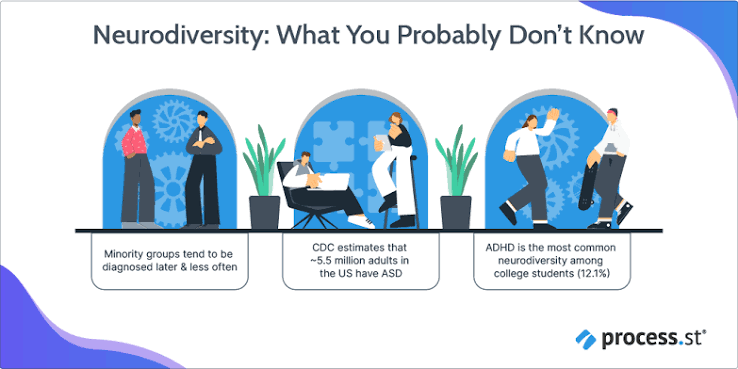
This is not a niche concern. Conservative estimates suggest that somewhere between fifteen and twenty percent of the global population experiences some form of neurological difference — including ADHD, autism spectrum conditions, dyslexia, dyspraxia, and others. These individuals are already inside most organizations. They are contributing, often at a high level, in roles that may or may not have been designed with their cognitive styles in mind. The question isn’t whether neurodivergent employees exist in your workforce. The question is whether your organization is set up to support them effectively — and whether you have the internal knowledge to even know the answer.
That gap in knowledge is exactly where a neurodiversity consultant enters the conversation.
Defining the Role and What It Actually Involves
A neurodiversity consultant is a specialist who works with organizations to assess, design, and refine workplace systems, policies, and practices so they account for a wide range of cognitive and neurological differences. For a more detailed breakdown of how this role is structured in practice, the Neurodiversity Consultant overview outlines the specific service areas and scope that organizations typically engage.
The role is distinct from a general DEI consultant in important ways. While DEI work often operates at the level of culture, demographics, and organizational equity, neurodiversity consulting focuses more precisely on how work is structured — how information is communicated, how performance is measured, how physical and digital environments function for people whose brains process input differently. The work is operational as much as it is cultural.
Consultants in this field typically bring a combination of clinical or psychological knowledge, HR experience, and practical organizational expertise. Some have backgrounds in occupational therapy or educational psychology. Others come from HR leadership roles and have developed their neurodiversity expertise through direct experience and additional training. What they share is an ability to translate cognitive science into actionable workplace adjustments that don’t require dismantling what already works.
The Difference Between Accommodation and Structural Design
One of the most important distinctions a neurodiversity consultant draws is the difference between individual accommodation and structural workplace design. Most HR teams, when they think about supporting neurodivergent employees, think in terms of accommodation — adjustments made case by case when an employee discloses a condition and requests support. This approach has value, but it places the entire burden of initiation on the employee and assumes that disclosure is always safe, comfortable, or even possible.
Structural design works differently. It asks what the workplace environment currently looks like for someone with sensory sensitivities, difficulty with ambiguous instructions, challenges with time estimation, or differences in social communication — and then asks whether those environments can be made more functional by default rather than by exception. Open-plan offices, poorly structured meeting formats, vague feedback systems, and rigid performance review criteria are examples of standard workplace features that create unnecessary friction for neurodivergent employees — often without anyone recognizing that as the cause.
A consultant working at the structural level helps organizations identify these friction points before they create turnover, underperformance, or legal exposure. This is a fundamentally different mode of problem-solving than waiting for individual disclosure and responding reactively.
Why Most HR Teams Haven’t Engaged This Kind of Expertise Yet
The absence of neurodiversity consulting from most HR strategies isn’t a sign of indifference. It reflects a genuine gap in how the topic has been represented in mainstream HR education and professional development. Most HR certification programs touch on disability compliance and reasonable accommodation under the Americans with Disabilities Act, but they don’t provide frameworks for understanding the operational implications of different cognitive styles, or tools for identifying where standard systems are inadvertently exclusionary.
As the CDC has documented, developmental and neurological differences affect a substantial portion of the population from childhood, and those conditions carry into adult working life in ways that are not always visible or disclosed. HR professionals working without neurodiversity-specific knowledge are often trying to solve problems — retention difficulties, performance inconsistencies, team friction, employee wellbeing concerns — without a complete picture of what’s driving them.
The Compliance Floor Is Not a Strategy
Many organizations treat ADA compliance as the ceiling of their responsibility when it comes to neurodivergent employees. Legally, compliance is necessary. Operationally, it is insufficient. The ADA framework was not built to address the full scope of how neurological differences interact with modern workplace design. It provides a minimum threshold for responding to disclosed disability, but it does not encourage proactive thinking about how work is structured, how communication norms are set, or how performance expectations are calibrated.
An organization that operates only at the compliance floor may still see higher attrition rates among neurodivergent employees, lower engagement, and missed opportunities to retain highly capable workers who couldn’t sustain themselves inside systems that weren’t built with cognitive diversity in mind. Compliance protects the organization legally. A genuine neurodiversity strategy helps the organization perform more effectively by keeping more of its people functional and engaged.
What Engagement With a Neurodiversity Consultant Typically Looks Like
Organizations engage neurodiversity consultants in a range of ways depending on their size, their current state of awareness, and the specific challenges they are trying to address. Some engagements begin with an organizational audit — a structured review of policies, physical environments, communication systems, and hiring practices to identify where neurodivergent employees are likely to encounter friction. Others begin with a specific problem: a leadership team noticing higher-than-expected turnover in a particular department, or HR flagging a pattern of accommodation requests that suggests a systemic issue.
In many cases, the consultant’s work spans several areas simultaneously:
• Reviewing job descriptions and interview processes to identify barriers that disadvantage neurodivergent candidates without any corresponding benefit to role performance
• Working with managers to develop clearer, more structured communication practices that reduce ambiguity without becoming rigid or patronizing
• Advising on physical and digital workspace design, including lighting, acoustics, software interfaces, and schedule flexibility, in ways that benefit neurological minorities without disrupting the broader workforce
• Training HR business partners and line managers to recognize neurological differences without pathologizing them, and to respond with practical support rather than referral to a compliance checklist
• Developing internal frameworks for voluntary disclosure that give employees more confidence that sharing information about their neurology will lead to support rather than stigma
The scope of any engagement is shaped by what the organization actually needs. There is no single template, because the combination of workforce demographics, industry context, and organizational culture varies significantly from one employer to the next.
The Manager Training Dimension
One area where neurodiversity consulting delivers particularly consistent value is in manager development. Managers sit at the point of greatest influence over how a neurodivergent employee experiences work on a day-to-day basis. They set expectations, deliver feedback, structure tasks, run meetings, and evaluate performance. If a manager lacks the knowledge to understand why a high-performing employee struggles with verbal-only instructions, or why a team member with strong analytical skills finds open-ended projects destabilizing, they are likely to misread the situation entirely.
Neurodiversity consultants work with managers not to turn them into clinicians, but to give them enough practical understanding of cognitive difference that they can adjust their management style in small, meaningful ways. The result is often a straightforward improvement in team function — not because the manager has changed their standards, but because they have changed how they communicate expectations, structure work, and provide feedback in ways that are clearer for everyone, not just those with identified neurological differences.
The Business Case Beyond Compliance and Retention
There is a documented and increasingly well-understood relationship between cognitive diversity and problem-solving quality. Organizations that have deliberately built teams with varied cognitive profiles — including neurodivergent thinkers — report advantages in pattern recognition, error detection, creative problem-solving, and the ability to hold unconventional perspectives alongside conventional ones. This is not a new idea, but it has gained more practical attention as organizations look for ways to improve performance that go beyond process optimization.
The business case for neurodiversity consulting isn’t built primarily on talent acquisition or brand positioning. It is built on the reality that organizations are already employing neurodivergent people — often in significant numbers — and the return on that employment is directly affected by whether the workplace is designed in a way that allows those individuals to do their best work consistently. A neurodiversity consultant helps close the gap between the cognitive capabilities an organization has hired and the operational environment in which those capabilities are expected to perform.
Closing Thoughts
The function of a neurodiversity consultant has remained unfamiliar to most HR teams not because the need doesn’t exist, but because the field itself is relatively recent in its formalization, and because the HR profession has historically approached neurological difference through a narrow compliance lens rather than a broader operational one.
That is beginning to change. As awareness of neurodiversity grows within both clinical and workplace contexts, more organizations are recognizing that reactive, disclosure-dependent accommodation is not sufficient — and that the systems they have built for managing, evaluating, and supporting employees were designed with an unspoken assumption of cognitive uniformity that doesn’t reflect reality.
A neurodiversity consultant does not ask organizations to lower their standards or fundamentally change their culture. They ask organizations to examine their systems closely enough to see where those systems are creating unnecessary barriers — and then to make adjustments that allow a broader range of people to perform at the level they are actually capable of. That is a pragmatic, grounded business objective. It is also, for many organizations, an overdue one.