
Introduction
Choosing a supplement for a pet can involve more than reading the product name or looking at the strength printed on the packaging. Pet owners also need to understand the main ingredient, intended purpose, tablet presentation and storage information. These details help make product comparisons clearer and support better conversations with a veterinarian. When a product is intended to support a particular area of health, understanding its label is an important first step.
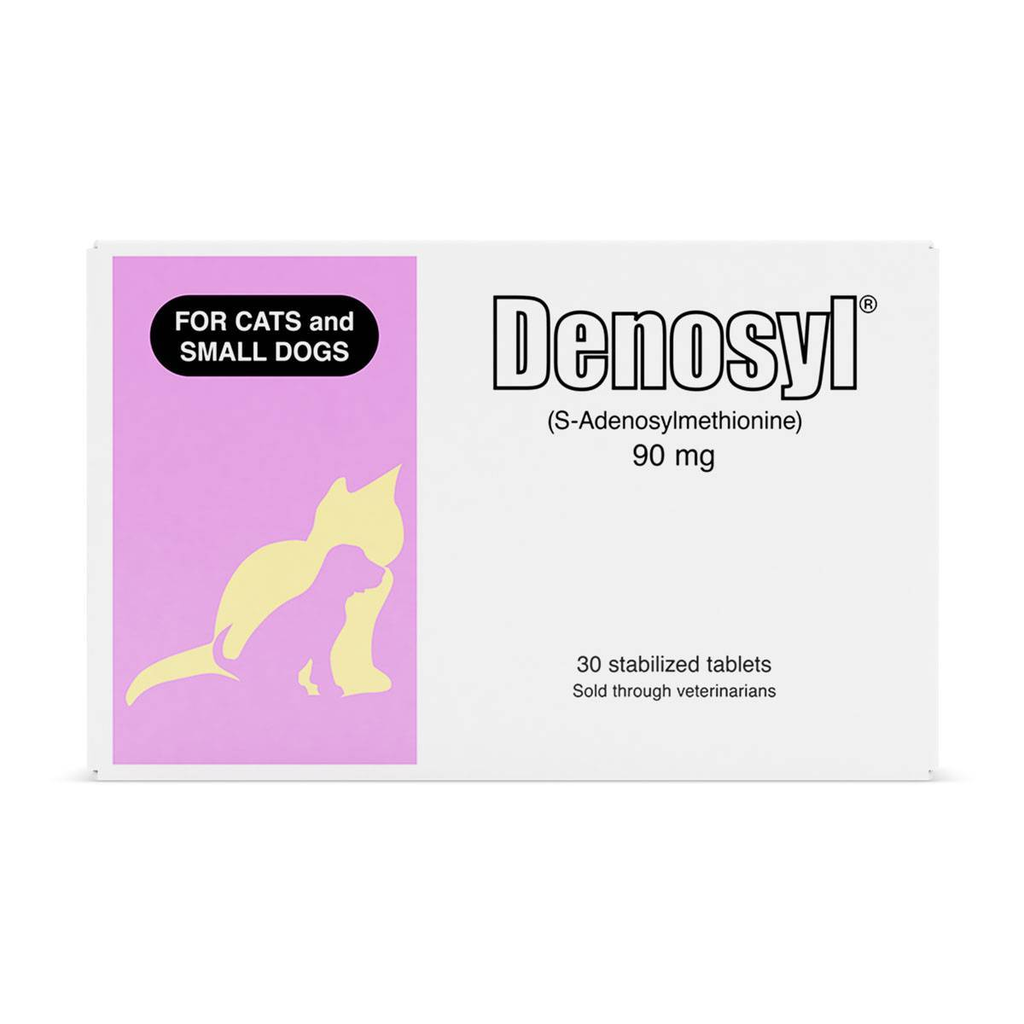
Denosyl is a veterinary supplement that contains S-adenosylmethionine, commonly known as SAMe. It is associated with liver health support in cats and dogs, while its manufacturer also describes potential cognitive support in dogs. The 90 mg presentation is intended for cats and small dogs. Learning what this ingredient does, how the product is presented and what to check before making an enquiry can help owners make more informed decisions without treating a supplement as a replacement for veterinary care.
Understanding SAMe and Its Role in Denosyl
SAMe is a compound that occurs naturally in the body and takes part in several important cellular processes. It is involved in reactions that help cells function and maintain normal biochemical activity. In the liver, SAMe is connected with the production of glutathione, an antioxidant that helps protect cells from oxidative stress. This is one reason SAMe is used in products designed to support liver health in animals. However, a supplement’s intended role should not be confused with a promise to treat or cure a medical condition.
Denosyl provides SAMe in a stabilised form and is available in tablet presentations for different animal sizes. The product is designed around a specific ingredient rather than a long list of unrelated nutrients. This makes it useful to understand exactly what the label identifies as its active ingredient. Owners should also remember that changes in appetite, energy, behaviour or other signs of illness need proper veterinary assessment. A supplement may form part of a wider care plan, but the decision to use it should take the animal’s health and medical history into account.
Reviewing the 90 mg Presentation and Product Details
The strength printed on a supplement label tells the reader how much of the named ingredient is contained in the stated unit. For Denosyl, the 90 mg presentation identifies the amount of SAMe in each tablet. It is listed for cats and small dogs, so it is important not to assume that the same presentation is suitable for every animal. Weight, health status and the veterinarian’s instructions all matter when deciding which product presentation is appropriate. The number on the pack is product information, not an individual dosing recommendation.
Pet owners researching Denosyl 90 mg for cats and small dogs should review the available listing details before making an enquiry. Check the strength, intended animal group, tablet form and pack information rather than relying on the product name alone. Pack quantities and availability can vary, so it is sensible to confirm the current details directly with the retailer. If the listing does not answer a question about the product or its presentation, ask for clarification instead of making assumptions based on another pack or a similar supplement.
Why Tablet Form and Storage Information Matter
The tablet format is another important part of understanding Denosyl. SAMe can be sensitive to environmental conditions, particularly moisture and heat. Manufacturer information advises keeping tablets protected in their original packaging until they are needed. This helps preserve the product’s intended condition during storage. Owners should read the packaging instructions supplied with their specific product and follow them carefully, especially if the supplement will be kept for an extended period.
The product’s administration information also deserves attention, but owners should not create their own routine based on a general online description. Manufacturer guidance explains that food can affect SAMe absorption and provides product-specific administration information. The appropriate plan should still be confirmed with the veterinarian, who can consider the animal’s needs and any other products being used. Tablets should not be altered, split or crushed unless the product instructions and veterinary advice specifically allow it. When in doubt, ask the veterinary team how to handle the tablet and what to do if a dose is missed.
Comparing Single-Ingredient and Combination Supplements
A single-ingredient supplement and a combination supplement serve different purposes from a label and comparison perspective. A single-ingredient product makes it easier to identify the main substance being introduced into a pet’s routine. A combination product may bring together several ingredients, which can be convenient when those ingredients have a clear shared purpose. However, a longer ingredient list does not automatically mean a product is more effective or better suited to an individual animal. The amount of each ingredient and the reason for including it are more useful details to examine.
When comparing options, the guide to single vs combination supplements can help owners think beyond the number of ingredients on the label. Consider whether the product clearly identifies its ingredients, whether their amounts are disclosed and whether the combination matches the question being discussed with the veterinarian. Also review the total number of supplements already included in the pet’s routine. Using several products at once can make it harder to understand which one is contributing to a change, and overlapping ingredients may create unnecessary complexity. A clear list of current products can make a veterinary review more useful.
Conclusion
Understanding Denosyl involves looking at more than its 90 mg strength. Its main ingredient, SAMe, is associated with liver health support, and the product is presented in tablet form for cats and small dogs. The label, pack details, storage instructions and intended animal group all help explain what the product is. Checking these details carefully can prevent confusion between different strengths and presentations, particularly when comparing products available through different retailers.
The most useful approach is to treat supplement research as part of a wider conversation about pet health. Review the product information, confirm current pack availability and ask a veterinarian whether the supplement is suitable for the animal. It is also worth keeping a record of other supplements and medicines being used, so the full routine can be considered together. Careful label reading and informed questions help owners make clearer decisions while keeping their pet’s individual needs at the centre of the process.