

Continuous glucose monitors could soon become a routine part of care for millions of people with type 2 diabetes who do not use insulin, after the largest clinical trial of its kind found that wearing the small sensor led to meaningfully better blood sugar control. The CONNECT randomized trial, published in the New England Journal of Medicine, found that adults using a Dexcom G7 monitor spent roughly five more hours each day inside their target glucose range than participants who received routine care alone.
Participants using the monitor also lowered their A1C — a standard measure of average blood sugar over about three months — by an average of 1.6 percentage points from a starting mean of 8.8 percent. That improvement was 0.9 percentage points greater than in the routine care group, a gap the researchers describe as well beyond what clinicians generally consider meaningful. A summary of the findings notes that nearly twice as many monitor users brought their A1C below 7 percent, a common treatment goal.
Why This Population Matters
An estimated 20 million adults in the United States have type 2 diabetes and do not take insulin, yet glucose monitors have historically been prescribed mainly to people on intensive insulin therapy. Many patients in this much larger group still do not reach recommended blood sugar targets, and prolonged high blood sugar raises the risk of heart disease, kidney damage and vision loss. The trial’s first author, Tamara Oser of the University of Colorado Anschutz, and her colleagues set out to test whether continuous data could change outcomes for this underserved majority.
The benefit appeared across a broad range of participants, including differences in age, sex, body mass index, diabetes duration, income, education and insurance status. Importantly, it also held for people taking GLP-1 medications, a fast-growing class of diabetes and weight-management drugs, among whom monitor users saw an additional A1C reduction compared with routine care. Further detail is available in the published study announcement.
How Continuous Data Changes Daily Decisions
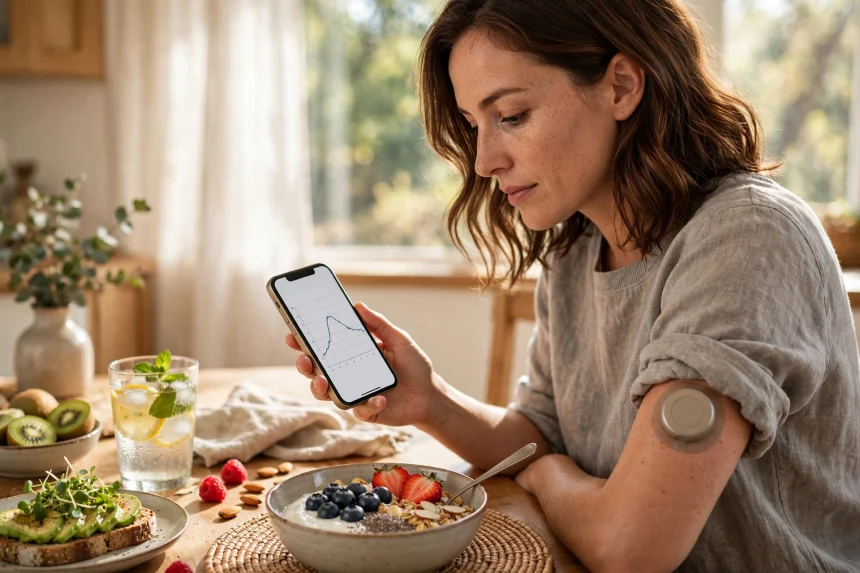
A glucose monitor is a small sensor worn on the body that tracks glucose around the clock and sends readings to a phone or receiver, replacing the occasional snapshot of a finger-stick test with a near-continuous picture. That feedback loop appears to be the mechanism behind the results: people can see, in close to real time, how a meal, a walk, stress or a poor night’s sleep moves their numbers, and adjust while the information is still useful.
Clinicians say this turns abstract advice into personal evidence. Instead of being told that a food spikes blood sugar, a patient watches their own curve rise and settle, and can experiment with portion size, meal order or a short walk afterwards. Over weeks, those small, informed adjustments add up — which may help explain why benefits showed up even in participants whose routines and resources differed widely. Readers interested in how everyday habits shape health may also like our piece on planning a balanced entertainment break.
What Happens Next: Access and Cost
The researchers and the study’s sponsor are now calling on physicians, insurers and health-system leaders to widen access, arguing that the evidence supports using monitors earlier in type 2 diabetes care rather than reserving them for patients on insulin. Publication in a leading journal is often a turning point in coverage debates, because payers tend to require exactly this kind of large, randomized evidence before expanding reimbursement.
Questions remain. Sensors require regular replacement, generate a stream of data that busy clinics must be able to review, and work best when patients receive some coaching on how to interpret trends rather than react to every reading. People considering a monitor should discuss it with their own clinician, who can judge whether it fits their treatment plan and what their insurance will cover. Still, for a condition managed largely through daily decisions, a tool that adds five hours a day in a healthy range is a significant step — and this trial gives doctors and patients solid evidence on which to base the conversation.