

A self-cleaning litter box sounds like the obvious solution to the worst chore in the house. You set it up, the machine rakes or rotates after each visit, and you stop scooping. In practice, the category ranges from genuinely convenient to a source of new problems, and the difference usually comes down to a handful of design choices that are hard to judge from a product photo.
The appeal is easy to understand. Busy owners, people who travel for work, and households with more than one cat all face the same reality: the box needs attention several times a day, and skipping it leads to smell and avoidance. A best self cleaning litter box promises to remove that burden, but only if it suits your cat and your routine.
This guide breaks down the factors that separate a reliable unit from a frustrating one, so you can evaluate options with the right questions instead of the loudest marketing.
The Questions That Actually Matter
Most buyers start with features: app control, weight sensors, odor filters, cycle counts. Those matter, but they are secondary. The first question is whether your cat will use the box at all. Self-cleaning units are often enclosed and mechanically active, and a cat that dislikes enclosed spaces or sudden noise will avoid them no matter how many features they offer.
The second question is what happens when the machine jams. Litter type, clump strength, and fill level all affect reliability, and a unit that stops mid-cycle can leave a mess that is worse than a manual box. The third question is how hard the box is to clean when it inevitably needs a deep wash. A self-cleaning box still requires maintenance; the question is whether that maintenance is quick or a project.
A fourth question is often overlooked: what the unit does when the power fails or the battery runs down. A box that cannot cycle leaves waste sitting in the open, and a unit with a manual override or battery backup handles that situation far more gracefully. In homes with unreliable power or frequent travel, that detail can decide whether the box is dependable or a liability.
Will Your Cat Accept It?
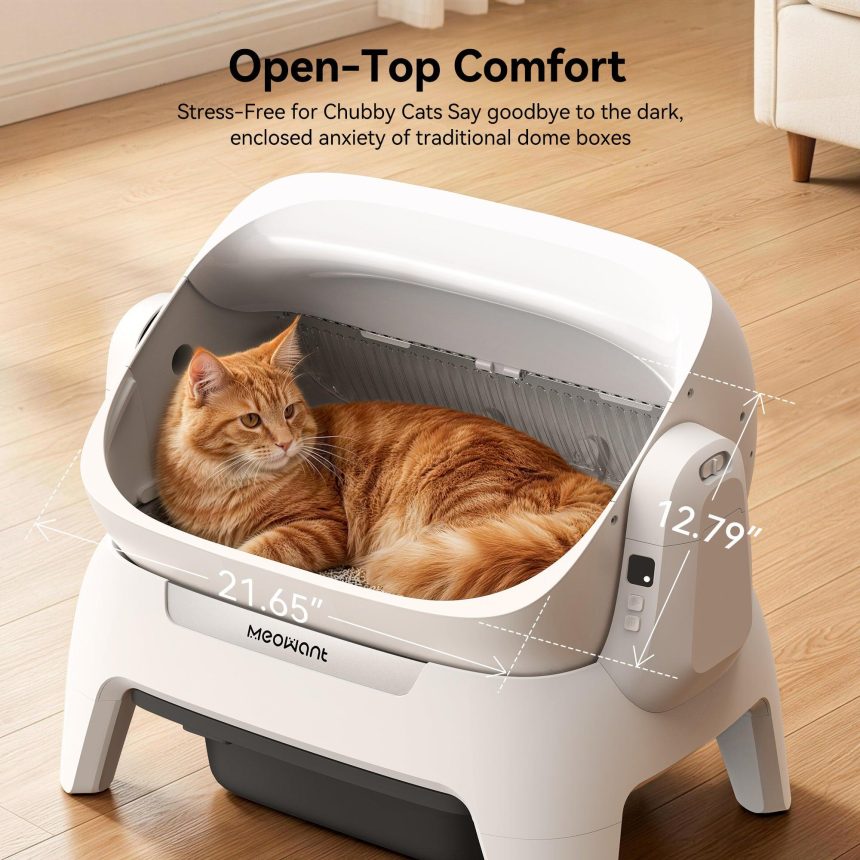
Open-top designs ease the transition for cats that dislike hoods, and a quiet motor reduces the chance of startling a nervous animal. If your cat is skittish, look for a unit with a delay before the cycle starts, so the cat can walk away before anything moves.
Design Features Worth Paying For
Among the features that genuinely improve daily life, a few stand out. An open-top layout keeps the box familiar and easy to monitor, which helps during the adjustment period and makes it simple to see when something is wrong. A well-designed entry keeps litter inside without forcing the cat through a narrow tunnel.
Sensor logic matters more than app features. A unit that detects when a cat has entered and waits a sensible interval before cycling will avoid startling the cat and reduce the chance of a cycle starting while the cat is still nearby. Reliable detection is the foundation everything else rests on.
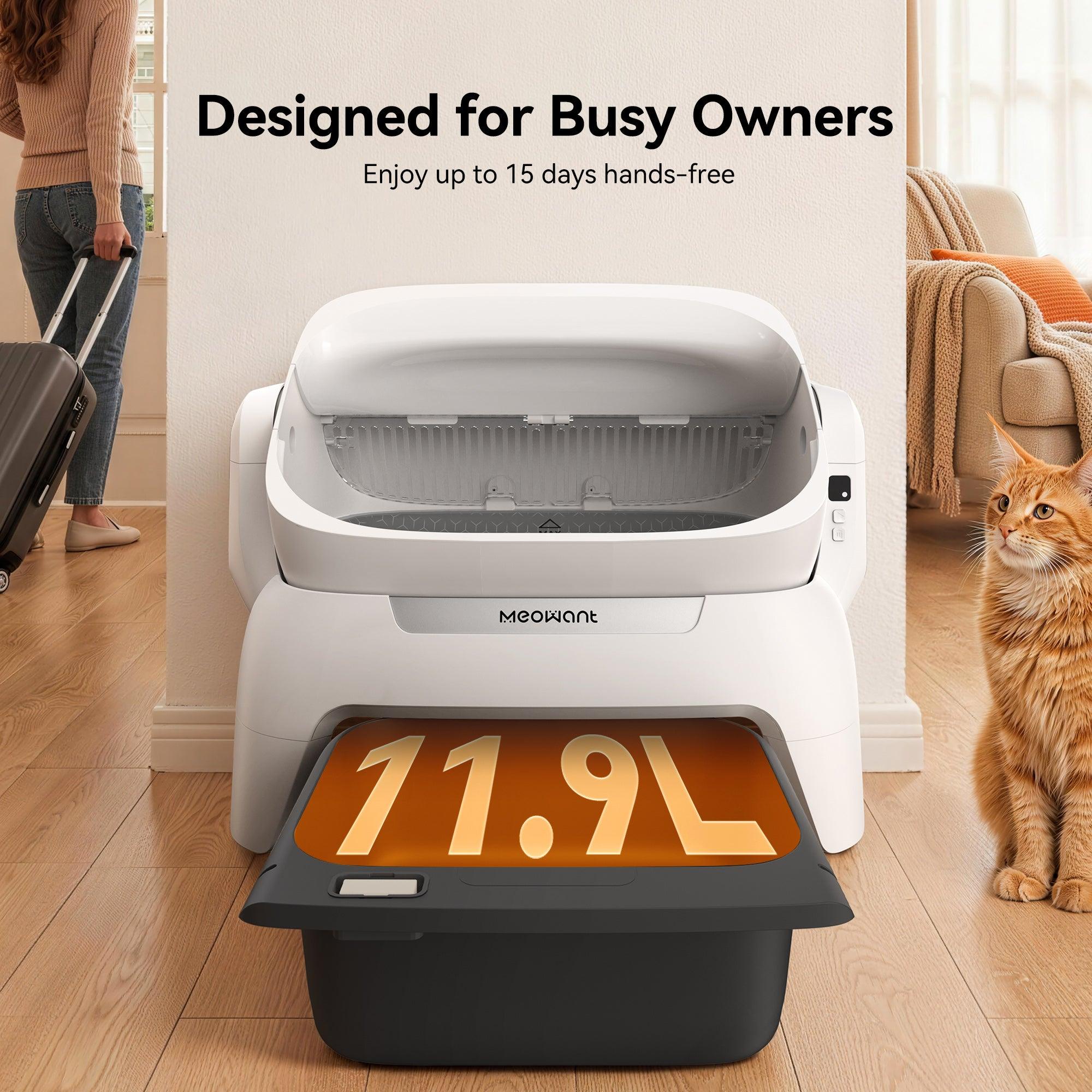
Waste capacity is another practical consideration. A larger drawer or bin means fewer trips to empty it, which is the whole point of automation. If you have multiple cats, check how many cycles the unit handles before the drawer fills, and how easy the drawer is to remove and wash.
Consider the footprint as well. Self-cleaning units are generally larger than a standard pan, and they need clearance around the entry and room for the mechanism to move. Measure the intended spot before ordering, including the space needed to open the lid or slide out the drawer.
Think about your cat’s size and age, too. A large cat needs a longer interior to turn around, and a senior cat benefits from a low entry. Kittens may need a step or a lower setting until they grow into the unit, and a box that accommodates those changes will serve you longer.
Built for Busy Owners
The strongest case for a self-cleaning box is a schedule that leaves little room for scooping. Shift workers, frequent travelers, and parents of young children all benefit when the box maintains itself between checks. The right unit turns litter duty from a daily interruption into a weekly task.
That said, automation does not mean abandonment. The box still needs the drawer emptied, the interior wiped down periodically, and the litter topped off. A unit that makes those steps quick is the one that actually delivers on the promise.
For owners who travel, the value is even clearer. Returning home to a box that has kept itself clean for several days removes one of the most stressful parts of leaving a cat behind. The waste drawer capacity becomes the limiting factor, so a larger drawer or a sitter who can empty it once or twice is worth planning for.
What to Check Before You Commit
Before buying, confirm the litter compatibility. Self-cleaning mechanisms are tuned to certain clumping litters, and the wrong type can cause jams or leave clumps behind. Read the manufacturer’s guidance and follow it rather than experimenting with whatever is on sale. A litter that clumps too slowly will smear across the mechanism, while one that clumps too hard can stick to the rake.
Check the power setup as well. Most units run on mains power with a backup battery option, and cord placement affects where the box can go in your home. If the box must sit far from an outlet, plan for that before it arrives.
Finally, look at the cleaning process. Can the interior be lifted out or wiped down without disassembling the motor? Are the rake or drum parts removable for rinsing? Meowant’s self-cleaning design keeps the interior accessible and the moving parts straightforward to service, which is the difference between a box you maintain and a box you dread.
It also helps to think about noise levels over time. A unit that sounds fine in a showroom can become irritating in a small apartment, especially if it cycles at night. Read owner feedback about long-term noise and check whether the cycle can be scheduled or delayed to avoid disturbing the household.
Adjustment and Long-Term Use
Plan for a transition period of one to two weeks. Keep the old box available, place the new unit nearby, and let your cat explore it without pressure. Run it through a cycle while your cat is calm so the sound becomes familiar. Once your cat is using it consistently, you can remove the old box.
After that, a monthly check is enough for most homes: empty and rinse the drawer, wipe the interior, inspect the mechanism for litter buildup, and confirm the sensors are clean. Those few minutes keep the unit running smoothly and prevent the kind of small failure that turns automation into extra work.
Watch for early warnings during that check. A cycle that sounds strained, a sensor that misses a visit, or litter tracking onto the surrounding floor all point to adjustments that are easier to make now than after a jam. Catching these small signals is what separates owners who love their self-cleaning box from those who give up on it.
Keep a small stock of the consumables the unit needs, whether that is liners, filters, or desiccant packs. Running out is the most common reason a self-cleaning box gets bypassed for a manual one, and a drawer of spares prevents that entirely.
Making the Decision With Confidence
A self-cleaning litter box is worth buying when it matches your cat’s temperament and your daily schedule. Prioritize acceptance, reliable detection, and easy maintenance over feature lists, and the unit will do what you bought it for.
If your cat is confident and curious, an open-top self-cleaning design can remove most of the daily scooping with little adjustment. If your cat is nervous, spend more time on the transition and choose a quiet unit with a cycle delay. Either way, keep realistic expectations: automation reduces work, but it does not eliminate care. Choose a box that is simple to live with, and the convenience you were promised will actually show up in your week.
The best way to judge a unit is to imagine living with it for a year. Ask how often you will empty the drawer, how easy the weekly wipe-down will be, and what happens the first time it jams. If those answers feel manageable, you have found a box worth buying. If any of them sound like a chore, keep looking, because a self-cleaning box that is hard to maintain is worse than a simple pan.