

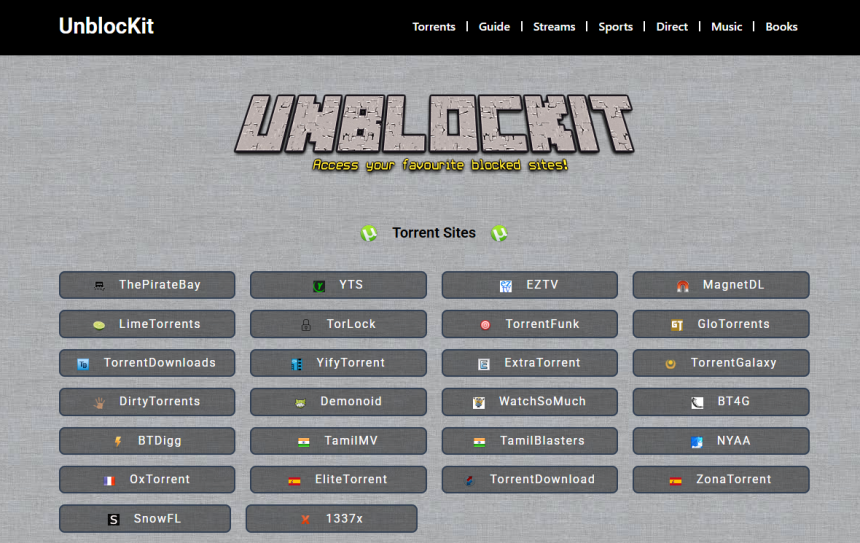
Streaming content from popular websites like The Pirate Bay, 1337x, YTS, and Primewire can often be difficult due to government restrictions, ISP bans, or regional limitations. Unblockit, a proxy and mirror site service, has emerged as a convenient solution for bypassing such restrictions. But before relying on it, a critical question arises — is Unblockit legal to use for streaming purposes?
Understanding the nature of proxy sites, digital rights management laws, and the actual content being accessed is essential to determine the legal standing of Unblockit. This guide explores everything you need to know about Unblockit’s functionality, potential risks, and how it fits within current legal frameworks around streaming.
Definition and Purpose of Unblockit
Unblockit functions as a proxy index — essentially a list of working mirror and proxy sites for well-known torrent and streaming platforms. It doesn’t host any content itself. Instead, it redirects users to alternate URLs that mimic the original website but are hosted on different domains. These mirrors can bypass regional or ISP blocks, giving users access to sites that are otherwise inaccessible in their country.
For example, suppose a user in the UK is blocked from accessing The Pirate Bay. In that case, Unblockit might provide a working mirror like similar that circumvents the block. The same goes for sites like YTS, 1337x, or Primewire.
Why Sites Like Unblockit Exist
Governments and ISPs regularly block torrent and piracy sites due to copyright infringement concerns. In response, mirror and proxy services pop up to restore access to these platforms. Unblockit simplifies this process by curating a list of mirrors in one place, making it easier for users to find alternate routes to blocked sites.
Many users turn to these services not only for piracy but for access to free, open-source content that may be blocked due to overzealous filtering. Others use them to stream older movies, documentaries, or user-uploaded content not available through mainstream platforms.
Legality of Proxy Services Like Unblockit
Proxy websites occupy a legal grey area. On the surface, offering a list of URLs or mirror links is not necessarily illegal — it’s similar to sharing a list of bookmarks. However, the legality becomes murky depending on the intent and the nature of the websites being unblocked.
In jurisdictions like the United States, the United Kingdom, and Australia, the use of proxy services to access copyright-infringing material can be interpreted as a violation of copyright law. Authorities typically focus on the source of the copyrighted content and the individuals who facilitate distribution, but end users can also be implicated in some cases.
Unblockit itself doesn’t host pirated material, but its clear association with torrent and illegal streaming sites exposes it to potential legal scrutiny. Therefore, legality depends heavily on how the platform is used.
Streaming vs. Downloading: Legal Implications
Streaming copyrighted content without permission might seem less serious than downloading it, but that isn’t always the case. In many regions, streaming content from unauthorized sources is considered copyright infringement, even if the material isn’t downloaded permanently to a device.
In countries like Germany or Japan, strict copyright enforcement laws have led to fines or legal actions against individual users for accessing streams from sites like Primewire or 1337x. Unblockit doesn’t offer streaming directly, but it can route users to sites that do, thereby potentially placing users at risk.
Risks Associated with Using Unblockit
Besides legal concerns, using a service like Unblockit can open users up to several other risks:
- Privacy Threats: Proxy services don’t always offer encryption, meaning your ISP or government can still monitor your activity.
- Malware Exposure: Many mirror sites listed through Unblockit are riddled with pop-ups, misleading ads, or malware.
- Data Logging: Some proxies track your activity, log your IP, or inject trackers into your browser sessio
- Fake Sites: Not all links listed on Unblockit are trustworthy. Some mirrors are actually spoofed versions designed to phish or steal data.
Is It Ever Legal to Use Unblockit?
Yes, in some circumstances. Not all sites linked through Unblockit are illegal or host pirated material. Users accessing public domain movies, Creative Commons content, or open-source projects may have legitimate reasons for using Unblockit. Additionally, some educational or indie content might only be available on sites like YTS or 1337x.
If the end destination doesn’t violate copyright laws and if the content accessed is legally distributable, then using a proxy like Unblockit would likely not break any laws. However, users need to be extremely cautious and verify the legality of the content they’re accessing.
How Copyright Laws Differ by Country
Copyright enforcement varies dramatically between regions:
- United States: The DMCA targets both hosts and users. Repeated infringement can result in legal action.
- UK and EU: Legal consequences for streaming from pirated sources are becoming more common.
- India: Accessing blocked content is discouraged, but enforcement is more lenient.
- Australia: ISPs are required to block piracy sites, and using tools like Unblockit may violate federal law.
Users should be familiar with the laws in their jurisdiction before relying on Unblockit to bypass regional restrictions.
Alternatives to Unblockit for Legal Streaming
For users who want to avoid legal and cybersecurity risks, several legal alternatives offer a safe streaming experience:
- Tubi, Pluto TV, and Crackle: Free streaming services with licensed content.
- Kanopy and Hoopla: Library-supported platforms offering movies and documentaries for free.
- Public Domain Torrents: A legal source of movies no longer under copyright protection.
- Internet Archive: Hosts thousands of classic films, educational videos, and indie content.
These platforms may not have the newest blockbusters but offer a completely legal and risk-free streaming experience.
Using VPNs vs. Proxy Services
A Virtual Private Network (VPN) offers better protection and legal clarity compared to web-based proxy sites like Unblockit. VPNs encrypt your traffic, making it more difficult for ISPs or governments to track your activity. However, they do not make illegal activities legal.
Some users combine Unblockit with a VPN, thinking this creates a safer setup. While it may add a layer of anonymity, it doesn’t change the legal risk associated with accessing pirated content.
Responsibility of End Users
Ultimately, users are responsible for the content they choose to stream. Unblockit doesn’t force users to engage in illegal behavior; it simply provides access. However, because it’s so heavily associated with piracy, any use of the site should be approached with caution.
If using Unblockit for research, archiving, or accessing educational content, there’s a stronger argument for legality. But if the intent is to stream newly released films or copyrighted series without paying, the legal risk increases significantly.
Enforcement and Real-World Penalties
While millions of users use sites like Unblockit, very few face consequences — but that doesn’t mean the risk is zero. Enforcement is often selective, with authorities targeting larger-scale infringers, uploaders, and commercial distributors.
That said, internet service providers sometimes issue warning letters or throttling notices to users who frequently access proxy and torrent sites. Repeat offenders may face account suspension or worse, especially in countries with strong copyright enforcement.
Conclusion
Unblockit exists in a murky zone between convenience and legality. It doesn’t directly host or stream pirated content but facilitates access to sites that often do. While the platform itself may not be illegal, using it to access copyrighted material without proper licensing or authorization can certainly land users in legal trouble.
For anyone concerned about legality, the safest route is to stick with licensed platforms or use Unblockit only for accessing free, public domain, or open-source content. Legal streaming alternatives may not always have the latest releases, but they offer peace of mind, safety, and support for creators.